
A Courtroom’s Ecosystem
There are big fish and little fish in a courtroom’s ecosystem. Judges are definitely the biggest fish of all. Interpreters? Well, that’s what I have been thinking about: where do we fit in the courtroom’s ecosystem? Throughout my years in this profession, I have encountered all sorts of misconceptions about our place in the courtroom’s hierarchy—are we the smaller fish of all? More specifically, there are a lot of misguided ideas about our role as integral components of that ecosystem otherwise known as the administration of justice. Misconceptions can be harbored by non-interpreters who believe, for example, that anyone who can speak two languages can be an interpreter. But they can also come from members of the profession.
When you are unsure about what it is, exactly, that you contribute to the sustainability of your environment—the courtroom environment, for example—you risk getting shoved to the bottom of the feeding chain by the bigger and smarter fish (stay with me on this extended metaphor!). Judiciary interpreters as a “species” among the legal and non-legal species that swim around us in courtroom environments don’t seem to share a clear, uniform, and standard concept of what we contribute to the administration of justice’s processes. While some believe we are there to provide meaningful language access for LEP defendants, others believe we are there to provide judges with the ability to communicate with LEP defendants. In between those two extremes runs a wide gamut of possibilities that end up sending mixed messages up and down the food chain. The end result? Some of us get swallowed whole, some of us get chewed up and spit out. Chances are, those who learn to navigate these treacherous waters by being well-informed and assertive are the only ones who get to survive and thrive.
Those who project self-confidence and are assertive about their rightful place as indispensable components of the justice system will enjoy higher prestige and respect than those who project insecurity. Most academic and independent training programs don’t teach judiciary interpreters to be assertive. Quite the opposite, we are taught mostly to be passive, invisible , and rather subservient to the other actors sharing our workspace. Even the non-professionals in the courtroom may behave as though the interpreter’s place is lower than theirs and should, therefore, yield to their authority.
So, what is our place in the courtroom ecosystem?
To answer this question, we can get some help from some post-Court Interpreters Act judicial decisions regarding the right to an interpreter: “The interpreter is necessary to implement fundamental notions of due process such as the right to be present at trial, the right to confront one’s accusers, and the right to counsel.” ( Martinez-Chavez v. State , 1989; also Chacon v. Wood , 1994; U.S. v. Mejia-Perez , 2018.) In fact, soon after 28 U.S.C. §1827 was approved, the right to an interpreter was elevated by the courts to a constitutional right, which is not something we interpreters often think about. In United States v. Lim (1986) the court held that “a defendant whose fluency in English is so impaired that it interferes with his right to confrontation or his capacity, as a witness, to understand or respond to questions has a constitutional right to an interpreter.”
Or we could go the academic route and seek more theoretical frames of reference to answer the question, like those offered by Mikkelson —“scholarly research on the role of the interpreter has revealed the shortcomings of the argument that interpreters are mere conduits transferring verbal messages from one language to another”; or Jacobsen —studies show “how some interpreters are prepared to exercise latitude and modify originals to convey their perception of speaker meaning.” These and many other scholarly papers address the question of the court interpreter’s allegedly passive role and counterargue that interpreters play a much more active—and critical—role in the transfer of meaning between languages. Still, the question of the interpreter’s role is not one we can say has been definitively answered.
The fact remains, nevertheless, that in the ecosystem of a courtroom, we are each individually and collectively responsible for being expertly knowledgeable about the historical, legal, and social reasons that have put us there. We need to be very clear about what it is exactly that we contribute to the overall balance of everyone else’s role in the administration of justice. And, finally, we have to be very clear about what we bring to the table for the effective sustainability of equal access under the law whenever LEP defendants or litigants are involved in a process. If you are encountering attitudes, behaviors, or treatment as though you were the smallest fish in that pond we call a courtroom, then ask yourself: how am I establishing my rightful place in this work environment? Do I actively work on enhancing my interpreting skills so I always project that I am a top-tier interpreter? Am I up to date on—or mostly well-versed in—the sources of knowledge that nurture my profession? Do I belong to the associations that represent my professional interests? If I were to testify as an expert, would I meet all the education and experience criteria expected by a legal scholar (i.e., a judge)?
I know we don’t have a clear answer yet, but I hope to have at least set out a roadmap to figure out “what is our place in the courtroom’s ecosystem?”
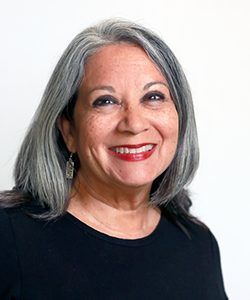
Janis Palma has been a federally certified English<>Spanish judiciary interpreter since 1981. Her experience includes conference work in the private sector and seminar interpreting for the U.S. State Department. She has been a consultant for various higher education institutions, professional associations, and government agencies on judiciary interpreting and translating issues. She worked as an independent contractor for over twenty years in federal, state, and immigration courts around the U.S. before taking a full-time job. Janis joined the U.S. District Courts in Puerto Rico as a staff interpreter in April 2002 and retired in 2017. She now lives in San Antonio, Texas, embracing the joys of being a grandmother. She also enjoys volunteering for her professional associations, has been on the SSTI and TAJIT Boards, and is currently the past Chair of the NAJIT Board of Directors. Contact: palmajanis88@gmail.com

We love to hear from our readers! If you wish to make a comment on this blog post, please use the comment box on the page below the post.
Categories
Select Category
Archives
Select Month
The views and opinions expressed are those of the author and do not necessarily reflect the official position of NAJIT.
Recent Posts