
A System of Checks and Balances
During my years of interpreting in many different areas, mostly in court and other legal settings, I have observed situations that seem, at the very least, inappropriate, unfair, and perhaps even illegal.
One of the first and simplest examples I can give is an assignment I just had a couple of days ago. I was sent to a company’s human-resources presentation introducing a new benefits management company. After the presentation, they began helping employees to register for benefits. I was assisting a person using a tablet to register when a woman approached me asking if her marital status was married or single. She told me she was not married but had filed “married filing jointly.” I referred her to the human-resources representative who, after asking the obvious question (are you married?) and hearing the answer (no), told her to write “married.” I have worked many years in accounting and bookkeeping and know how strict the IRS can be, so I was mortified. My job, however, is not to look after the LEP individual’s tax compliance, but to interpret and translate forms for them, so I kept my thoughts to myself.
All the same, having worked in accounting for more than fifteen years, I was appalled, and when I arrived home, I did a bit of searching and found the following:
“Under Section 1001 of title 18 of the United States Code, it is a federal crime to knowingly and willfully make a materially false, fictitious, or fraudulent statement in any matter within the jurisdiction of the executive, legislative, or judicial branch of the United States.”
I know the chances are small of someone being caught for misleading statements such as these, but I felt anguish nonetheless. I know that if I had been there as one of the new management-company representatives, the bookkeeper, the secretary, or the accountant, I could easily have been helpful and given a proper answer. But as an interpreter, I couldn’t. These are moral issues that I assume many of our colleagues deal with. This woman’s situation may have been considered a civil union, but in Illinois (where this assignment was taking place) the process for a civil union is as official as a marriage, yet the status is not recognized as such by federal law. Additionally, domestic partnerships are no longer a legal option for residents of Illinois.
A human-resources manager knows very well that the answer to the question of whether an employee should select “married” or “single” on a form is a very simple one. If the employee is married, choose “married” and if single, then choose “single.” This manager did not seem to have any qualms with her reply to the employee who came to her looking for advice. So why do I have a problem with it? I was just the interpreter, right?
This next example may illustrate my dilemma a little better.
I was asked to interpret for a lawyer who was explaining a plea agreement to his client in criminal court. Once the forms were filled out, we were to go before the judge. The LEP defendant was very confused and did not answer the questions during the preparation the way the attorney needed them answered in order to enter the plea, so before the hearing started, the attorney told his client that when the answer needed to be “yes” he would tap the table with one finger, and when a “no” was required, he would tap the table with two fingers. They did just that before the judge. I kept looking at everyone: the prosecutor, the judge, the clerk, the sheriffs, and they all saw what I saw. Not one person there had a problem with what transpired. So again, you would ask that if the individuals who have the power to put a stop to this process and give back to the LEP the right to be fully present in his or her own defense and afford him or her what the law provides through jurisprudence did not intervene, who am I to protest? While in the courtroom, I am an officer of the court, and it would be within my purview (see below) to report the issues that impede language access. However, to whom is the interpreter to report this? The court, the clerk’s office, the sheriff’s office? All those offices were physically represented and were witnessing what was occurring.
“Many persons who come before the courts are partially or completely excluded from full participation in the proceedings either because English is not their native language or because they have a speech or hearing impairment. The resulting communication barrier must be removed , as far as is possible, so that those persons are placed in the same position as similarly situated persons for whom there is no such barrier. As officers of the court, interpreters, transliterators, and translators help ensure that such persons enjoy equal access to justice and that court proceedings and court support services function efficiently and effectively. Interpreters, transliterators, and translators are highly skilled professionals who fulfill an essential role in the administration of justice.”
I learned about the system of checks and balances while working in accounting. Although the system is mainly used in government contexts, it can be applied in many others within the public and private sectors. In practical terms, the authority to take a given action rests with one department, while the responsibility to verify the appropriateness and legality of that action rests with another. So, I keep asking myself: why is this system failing? Who is responsible? But more importantly, are there solutions?
I know what my role is as an interpreter, and I am subject to my own code of ethics and conduct, but that does not mean that I do not struggle with these limitations and moral dilemmas.
Is that your experience? If so, how do you deal with these issues?
Your input can help us all in the profession, so please share how you handle not only the issues but the moral dilemmas as well. Thank you for reading TNO and for following this journey!
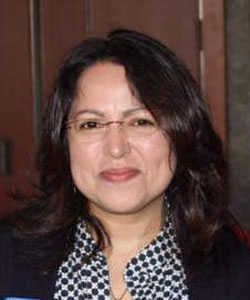
Hilda Zavala is a state certified/approved Spanish court interpreter and translator with more than thirteen years of experience in legal, medical, corporate, and non-profit settings in New York, New Jersey, Illinois, and Wisconsin. She is a board member, treasurer, and Conference Committee chair of the National Association of Judiciary Interpreters and Translators as well as former president of the New York Circle of Translators. She is an active and voting member of NAJIT, ATA, the NYCT and other professional groups. Hilda has two certificates of Legal Interpreting: Spanish/English, the latest one from NYU. Hilda has been a Staff Interpreter at Essex County Superior Court in New Jersey for over five years. Born in Chicago, Hilda lived for twenty years in Mexico and loves traveling. She continuously looks for opportunities to promote and advance the interpreting profession. Contact: hzavala@najit.org

We love to hear from our readers! If you wish to make a comment on this blog post, please use the comment box on the page below the post.
Categories
Select Category
Archives
Select Month
The views and opinions expressed are those of the author and do not necessarily reflect the official position of NAJIT.
Recent Posts