On Continuing Education
by Bethany Korp (c) 2016
I bet you just rolled your eyes, didn’t you? You are tired of hearing about continuing education, yes? Good! That’s why I want to talk about it.
You see, not long ago, I was attending a small local interpreter conference. On a break, I checked Facebook, and saw a blog post by one of my favorite T&I bloggers about the value of continuing education. The blogger had excellent points about why we should always keep learning, whether or not it is required, so I will not repeat those here. I wanted to address another point that I thought did not get enough attention there.
The post started out by discussing the reasons that experienced, highly-credentialed interpreters don’t believe they really need continuing education. One of the main reasons (it may even have been the first) was some variation of “nothing new under the sun”: those interpreters feel that they’ve already learned everything there is to know about interpreting. They don’t need another Multi-Day Advanced Simultaneous, Consecutive, and Sight Interpreting Intensive Boot Camp. (No identification with actual persons, places, buildings, and products is intended or should be inferred.)
Now, certainly, I have attended training events that I did not find particularly useful. I have been interpreting full-time for more than fifteen years, have a degree in it, state and federal court certification, and have taught, trained, written, and blogged extensively. There are a vast number of things I already know and I don’t need more training on.
But I do not know everything. I certainly don’t know everything about everything (my grasp of calculus is tenuous at best). But I don’t even know everything I need to know to be the best interpreter I can possibly be. And neither do you.
There are three main things that we need to know in order to be the best possible interpreters. One, we need to be able to interpret in all three modes, all day, every day, under every circumstance, with 100% accuracy. Two, we need to have a thorough grasp of all techniques and processes ancillary to our actual interpreting (ethics, use of equipment, team interpreting, terminology research and management, voice modulation and projection, grammar, and so on). Three, we need to understand and converse about intelligently in at least two languages, everything about every topic that might possibly be discussed in a legal setting: Law (American and international; municipal, state, and federal; civil, criminal, family, equity, and appellate). Business. Medicine. Education. Finance. Auto repair. Forensics. Ballistics. Psychology. Long-haul trucking. Factories. Construction. Slang and obscenities. Information technology. Arithmetic, if not higher mathematics.
Are there training events that are not useful? Yes. Why are you attending them? If you said “because I have to or I’ll lose my certification,” you’re missing the point. Why are you attending those training events in particular ? There is an interpreting conference somewhere in the US every time I turn around, plus plenty of non-profit and for-profit organizations that specialize in interpreting training. In the last few years, I have attended specialized training via interpreting groups and organizations on several new types of technology or new ways to use existing technology; the specific vocabulary challenges of interpreting in certain settings; the operation and mechanics of firearms; a completely new approach to ethics that led to the complete revamping of at least one state’s Code of Professional Conduct for Interpreters.
But why stop there? Take a course or training from the third category! Check with your local Bar Association about Continuing Legal Education events. Sign up for a community college class on auto repair. Visit your local library and see what community events they’re hosting.
Or in short: if the training you’ve attended isn’t useful, that’s on you. Go find one that is. They’re out there.
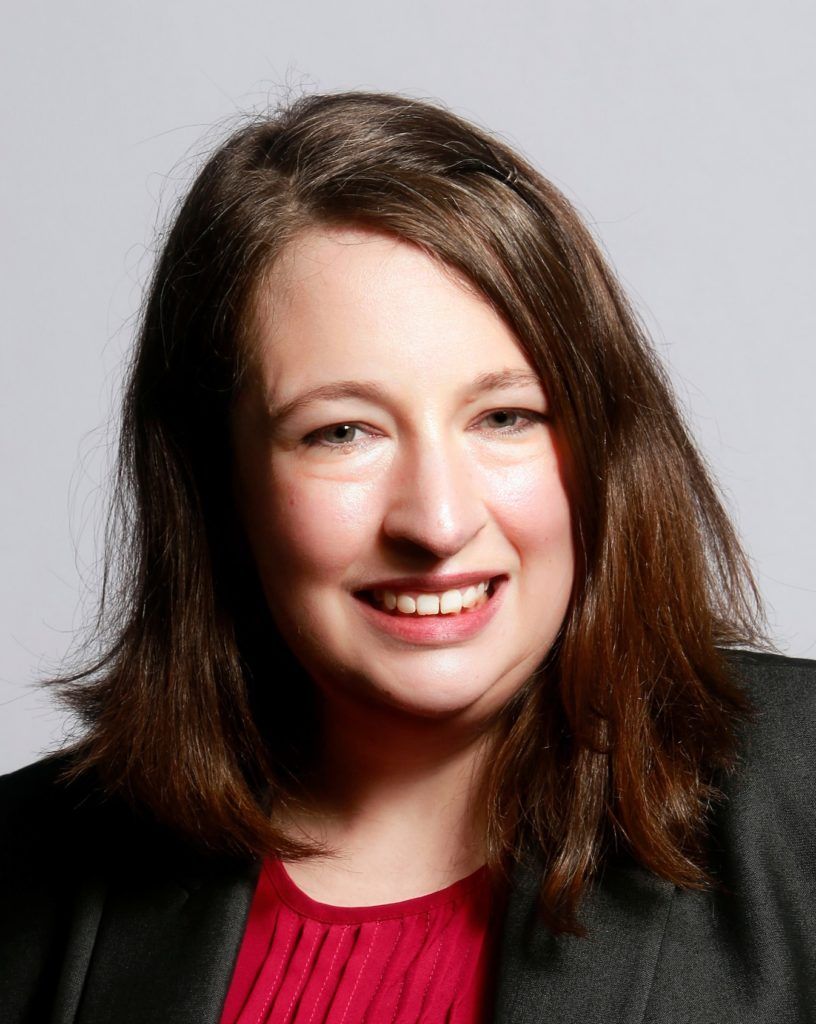
Bethany Korp is a federally- and state-certified Spanish interpreter currently based in the Philadelphia metro area. In addition to working as a legal interpreter and translator since 2001, she has worked as an interpreter trainer and lecturer. In 2014, she led a working group to completely rewrite the New Mexico Code of Professional Responsibility to conform with the above principles. She holds a BA in Spanish (William & Mary) and an MA in Spanish Translation (Rutgers) and is also ATA-certified (Spanish/English). You can learn more in her website The Intrepid Interpreter
We love to hear from our readers! If you wish to make a comment on this blog post, please use the comment box on the page below the post.
Categories
Select Category
Archives
Select Month
The views and opinions expressed are those of the author and do not necessarily reflect the official position of NAJIT.
Recent Posts