
Breaking Attorney Client Privilege: “Who, Me?”
Breaking Attorney Client Privilege: “Who, Me?”
By: Hilda Shymanik
A few months ago, while working remotely during a bond hearing, I was interpreting in the consecutive mode when the judge asked a Limited English Proficient (LEP) individual if he understood what the judge had explained. As we may all know, litigants are not always able, or capable, socially and culturally speaking to give a seemingly logical answer such as a yes or a no.
Instead, at every opportunity of answering that very simple question, he would go on to answer that he did feel guilty, that he considered himself guilty, and all sorts of alternative answers that included the word guilty.
Every time, the judge repeated the question, as soon as the LEP started speaking in narrative style, his attorney shouted over him to tell him to stop and just answer the question, which caused the attorney’s screen to pop up in the forefront, as the conference call was set up to feature the speaker on the screen.
The gavel – a symbol of justice, power, and decision-making.
As the LEP tried to answer the question for about the fifth time, I got the opportunity to interpret before the attorney started shouting because he had momentarily muted his microphone (I could see his mouth moving, but no sound was coming out). What followed was his attorney’s furious shouting at me for interpreting, because according to him, I was violating attorney-client privilege, since his client probably believed that he was speaking to his attorney in confidence rather than to everyone else on the call.
The defendant’s attorney went on to explain that his client had never used or sat in front of a computer before and that this was the first time, that because the counsel’s face was on-screen, sometimes at the forefront or in the back, his client believed he was under the protection of attorney-client privileged communication.
I can imagine that the attorney may have a point, however, warning his client about not saying anything relating to the case at this first hearing was his responsibility. When working remotely, I do not have the opportunity to speak for a few minutes with a defendant before the hearing to inform him that everything he says in Spanish will be repeated for judges and counsel to hear, as I am not involved in how or when they are brought in to court when the hearing is via zoom. I must assume that he already knows that; “But does he?”
I had the chance to consult with a few judges later—not the one in question—and, as we learned from our training, the litmus test is: ‘If the person had spoken in English, everyone would have heard him.’
Of course, the attorney was immediately chastised for trying to pull a fast one, but these things do happen; especially with an LEP person and the level of technical sophistication he had. This is a situation for which no amount of experience prepares you for.
In my opinion, there was nothing for the interpreter to do but interpret unless ordered not to by the one person who could have done that: the judge.
Leave your opinion below and tell me, what would you have done?
Am I guilty as charged?
Thank you for reading The NAJIT Observer’s Blog!
The author has consented to the use of their image in this blog. Additionally, all other images featured herein are sourced from Unsplash, a platform that offers high-quality photos free for both personal and commercial use without requiring attribution.

Join the NAJIT Observer’s vibrant community of contributors! We are seeking passionate writers to share insights on legal translation and interpretation. Email your pitch or draft today and help shape our industry. Visit najit.org/blog for more details.
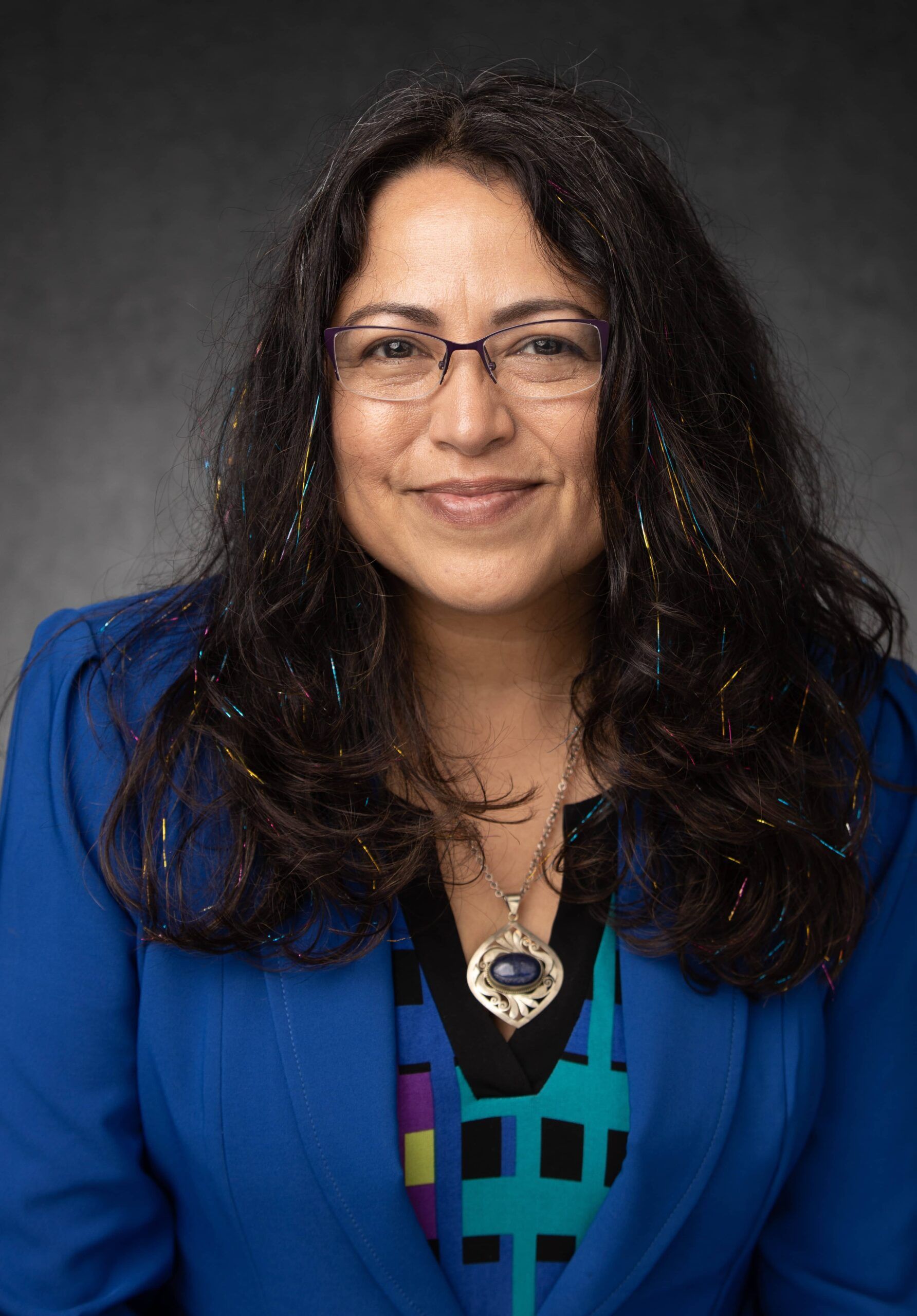
Portrait of a woman in a blue blazer and glasses, smiling warmly with colorful tinsel in her hair
Hilda Zavala-Shymanik is a state certified/approved Spanish court interpreter and translator with more than seventeen years of experience in legal, medical, corporate, and non-profit settings in New York, New Jersey, Illinois, and Wisconsin and is certified/approved in those four states. Hilda is a former Vice Chair, Board Member, Treasurer, Conference Committee Chair, member of the Training and Education and Advocacy Committees, and current member of the blog team and Chair of the Elections Committee of the National Association of Judiciary Interpreters and Translators, as well as former president of the New York Circle of Translators.
She is an active and voting member of NAJIT, ATA, MATI and other professional groups. Hilda has two certificates in Legal Interpreting in Spanish and English, the latest one from NYU. Hilda is the current staff interpreter of the 23rd Illinois Judicial Circuit, as well as a Cook County (Illinois) Spanish Interpreter employee. Hilda is a former Staff Interpreter at Essex County Superior Court in New Jersey, where she worked for six years. Born in Chicago, Hilda lived for twenty years in Mexico and loves traveling. She continuously looks for opportunities to promote and advance the interpreting profession.

We love to hear from our readers! If you wish to make a comment on this blog post, please use the comment box on the page below the post.
Categories
Select Category
Archives
Select Month
The views and opinions expressed are those of the author and do not necessarily reflect the official position of NAJIT.
Recent Posts