The Wedding Interpreter

NAJIT Editor • July 23, 2026

Share this article

The Wedding Interpreter

By: Athena Matilsky

“Leo, do you take Kate to be your lawfully wedded wife, 

for better or worse, 

in sickness and in health, 

to love and to cherish, 

as long as you both shall live?”

“Leo, acceptes-tu de prendre Kate pour épouse,
pour le meilleur et pour le pire,
dans la santé et dans la maladie,
pour l'aimer et la chérir,
Jusqu’à ce que la mort vous sépare?


The music starts. 

The groomsmen and bridesmaids proceed down the aisle.

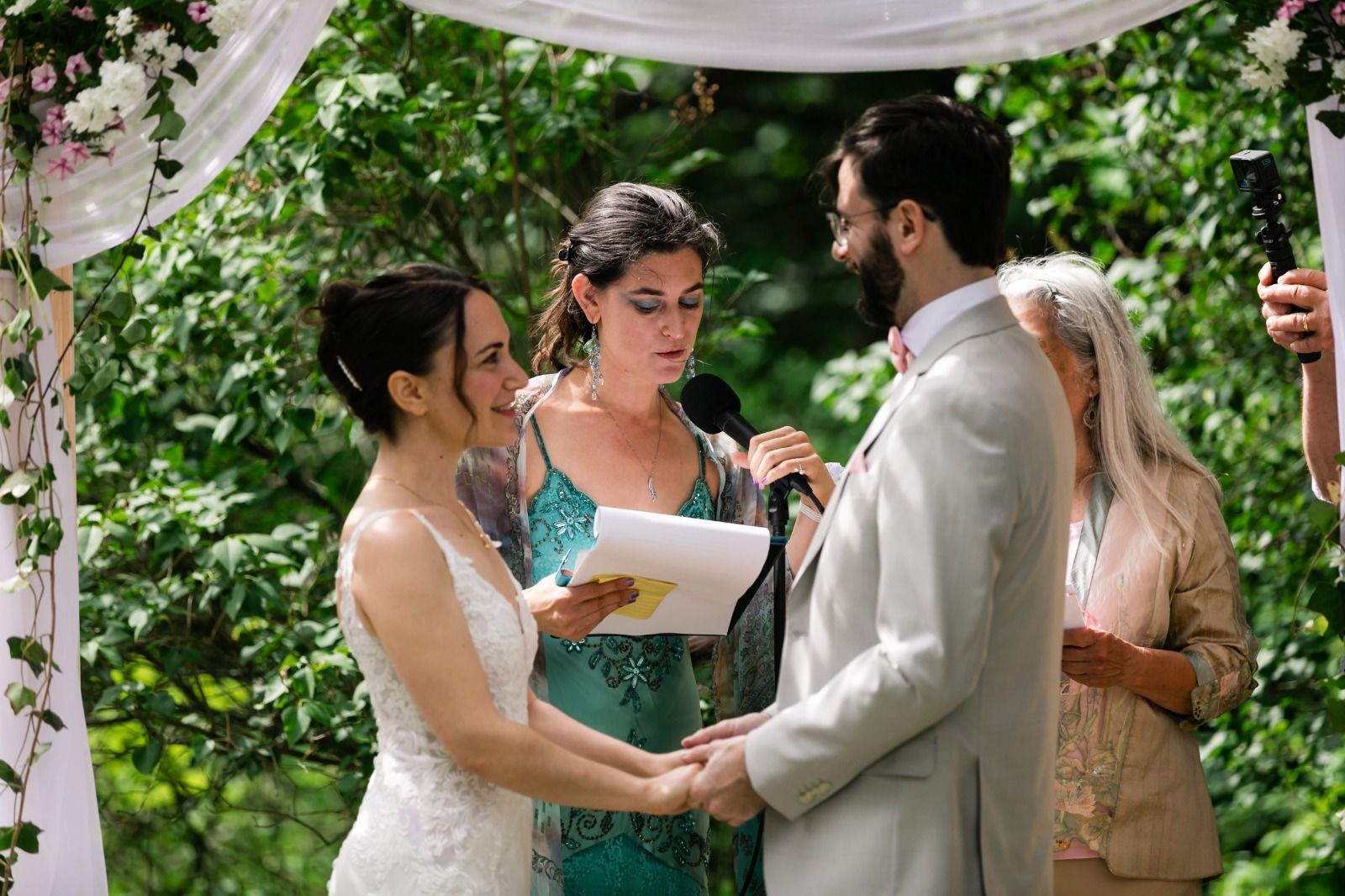
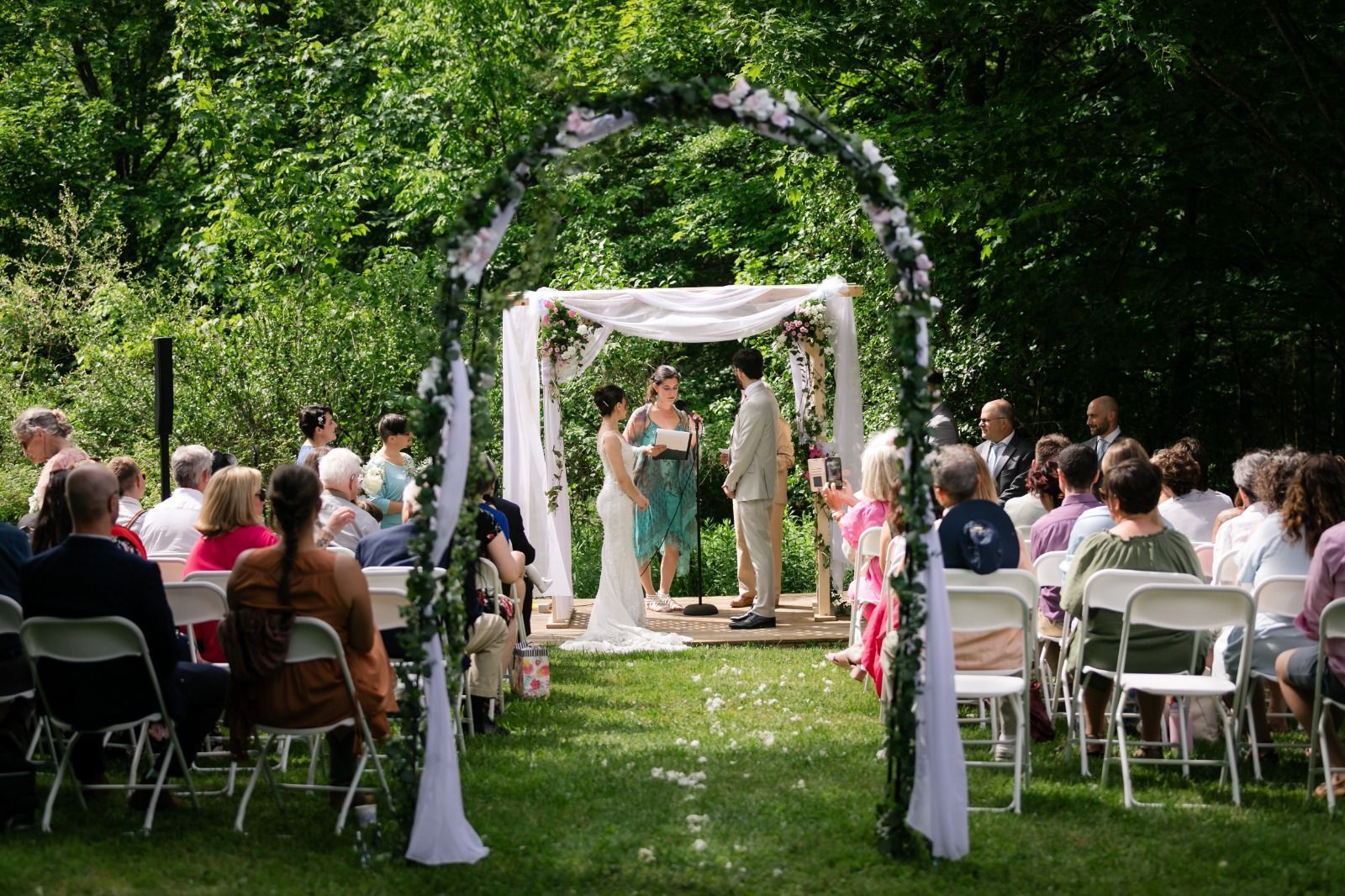
Then comes the bride, radiant in a beautiful, mermaid-shaped white bridal gown with a glorious lacy train.

When she reaches the chuppah, she whispers to me: “I haven’t quite finished memorizing how to say my vows in French, so you’ll do it, okay?” I had never seen her vows before. She had written them herself in her husband-to-be’s native tongue on a piece of paper which she handed me midway through the ceremony. She must have worked hard on the painstaking translation; the French was perfect. Thank God she has excellent handwriting.


The wedding interpretation had been months in the planning. Kate, the bride, is a childhood friend with whom I had recently reconnected when she visited Montreal. She was traveling from California and her then-boyfriend Léo, from France. My adopted city served as a halfway point for them to meet. 

We ate dinner and reminisced about old times: soccer games played on the vast gardens of her parents’ home which they had built themselves by hand years before we were born; fresh wild blackberries from her backyard; board games and pot lucks and rainy days spent running about as children. 


So it was only natural that, when she announced her engagement, I volunteered to be the interpreter. Léo would have family traveling from France to attend, and some of them would speak very limited English. 


I have a supply of interpreting equipment and I thought I would distribute the headsets and blend into the background, interpreting the English ceremony for the benefit of the French listeners.


Kate and Léo had other plans. 


“We want you up there with us,” they informed me when we met for our planning session back in April. 


“Wait…you mean, like, at the altar?” They nodded. “Under the chuppah?” I said, just to be sure. They nodded once more. “Next to the officiant?!” I asked, suddenly wondering if I had bitten off more than I could chew. They nodded emphatically. 


“You’ll be great!” Léo assured me, and that was that. 


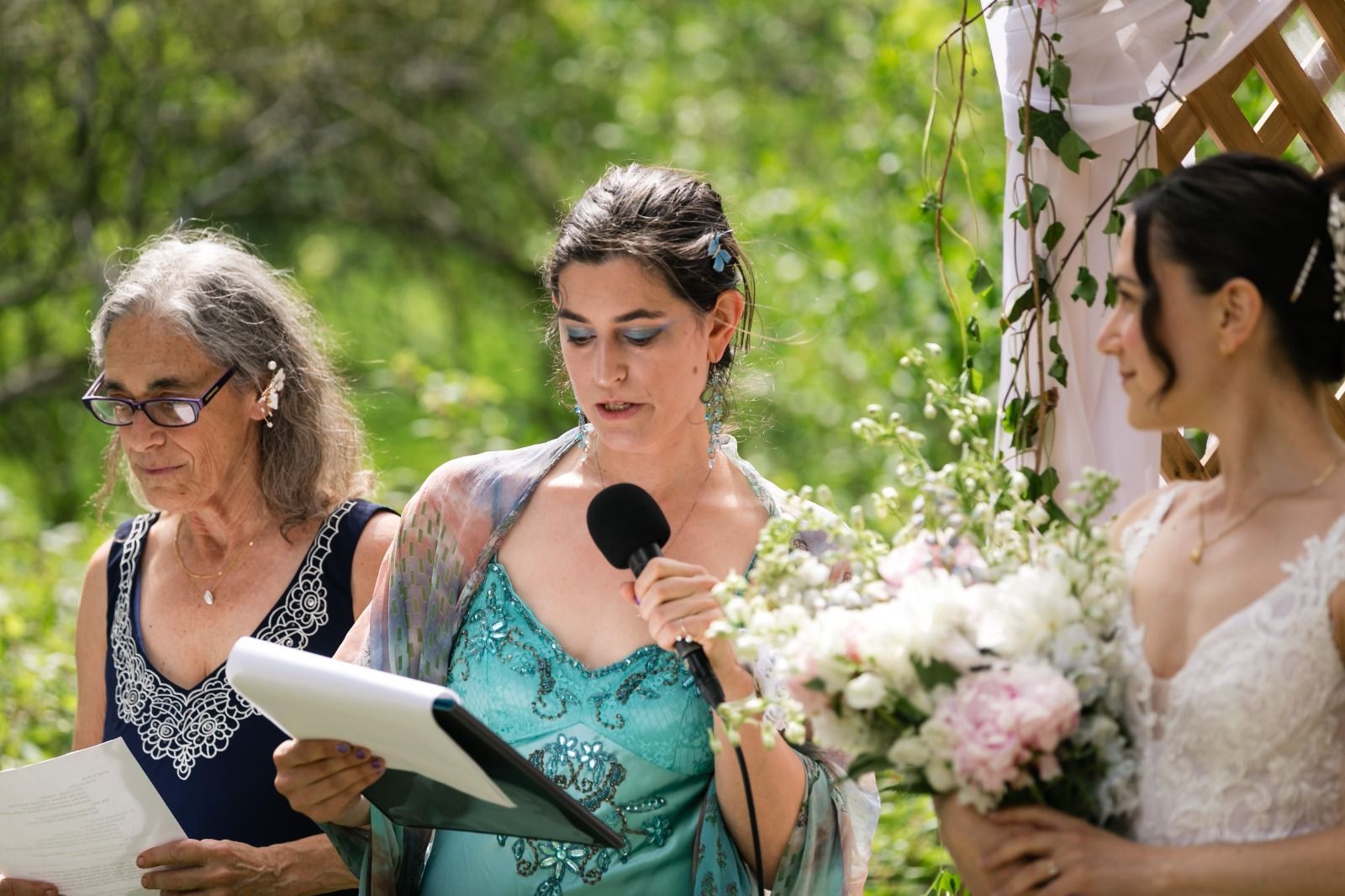
And so it was that I found myself, on a beautiful day in early June, on the same grass that we used to play on as a child, below the chuppah, watching Kate walk down the flower-bedecked aisle and aiding her in the recitation of her vows. 


We interpreters rarely have the pleasure of transmitting that much joy and emotion from one language to another. This was the most fun interpreting assignment I’ve ever had.  


Throughout the ceremony, the officiant and I took turns at the microphone, first with her speaking in English, then with me in French. I interpreted the poem from the mother of the bride, the wine glass ceremony with the bride’s aunt, and the vows themselves. 


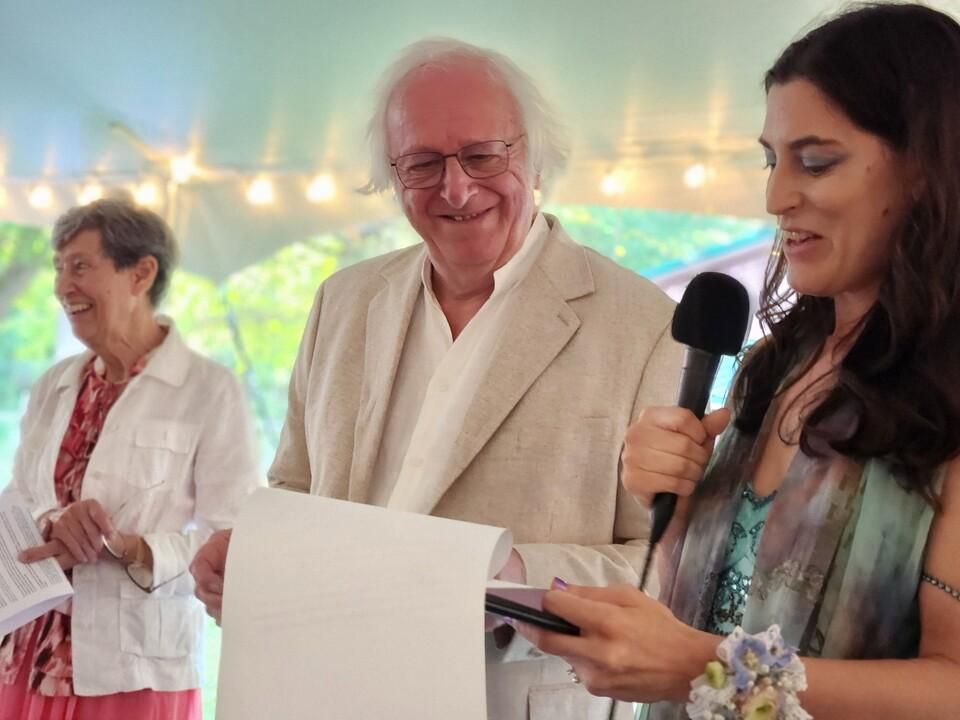
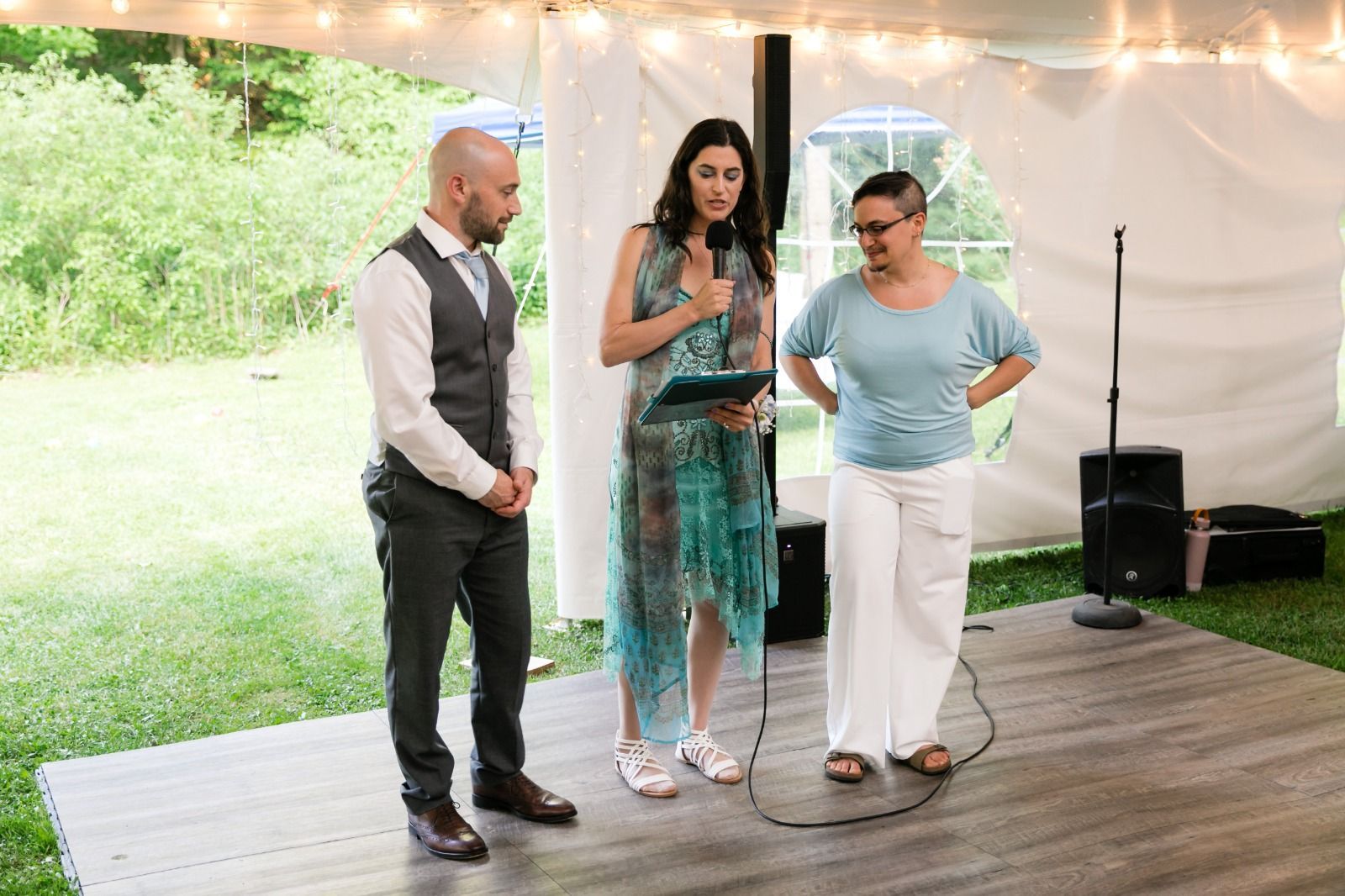
Then came the toasts and the speeches. 


Absolutely everything was requested in advance. Advance preparation is always important for interpreting assignments, but especially for a wedding, and especially when interpreting into my third language. We created a Google Drive folder where the documents could be edited and updated on both sides. Deadlines were set. Drafts were tweaked. 


Written translations were prepared ahead of time, receiving feedback from generous colleagues on word choice and grammar. Then I practiced speaking, over and over, again with feedback from colleagues, until feeling more or less confident that I wouldn’t embarrass my friend and her husband-to-be on one of the most important days of their life.


Still though, there were surprises. The jokes her father added into his speech; the surprise  good omen of a falcon interrupting the speech; moments of laughter and tears; lines missed and lines added. 


The main objective was to capture the emotion; to keep a good rhythm; to time the jokes properly. Overall, to flow with excitement and confidence, and to convey the soul and the meaning behind each word that was spoken. 


A clipboard with about 20 pages of notes on it followed me around as the evening wore on. My worst fear was that the papers would get mixed up and I would be lost. There was a moment right in the middle of the ceremony where I turned the page and found a completely irrelevant sheet of paper. I breathed, flipped that page, and found the spot where I was supposed to be. 


Finally, the speeches were over, my job was done, and the dancing began. I am sorry I had to miss our annual NAJIT conference, but I’m thrilled to have done it for such a worthwhile cause. What about you? What has been your favorite interpreting assignment to date? Comment below! 


Keep the Conversation Going

If this topic resonated with you, be sure to check out our previous blog posts for more insights on the realities of our profession, and the evolving world of judiciary translation and interpreting:

Language is Evocative  — How do you balance literal accuracy with conveying the intended meaning when interpreting or translating?

Go Team! —  What makes team interpreting the professional standard?

Leila's McDonald's —  As AI continues to evolve, where should interpreters place their focus: protecting the profession or serving LEPs?

Miranda Warnings Translations: A Resource For Law Enforcement From NAJIT & IKIGAI —  Why do accurate Miranda warning translations matter, and how is NAJIT helping improve language access for law enforcement and LEP individuals?

You can find these and more in our blog archives!

Interested in sharing your insights with our community? Check out Writing for The NAJIT Observer to learn how you can contribute.


Disclaimers:

The images used in this post are sourced from the author and NAJIT was allowed to use these images by the owner/author. They are used for illustrative purposes only.


The views and opinions expressed in this post are those of the author(s) and do not necessarily reflect the official position, policies, or views of the NAJIT Board of Directors or the organization as a whole. Content published in The NAJIT Observer is intended to encourage professional dialogue, reflection, and community engagement. Reader discretion is advised where topics may involve complex ethical, professional, or emotionally sensitive subject matter.


Athena Matilsky 

Blog Writer & Proofreader


Athena Matilsky fell in love with languages the year she turned sixteen. She majored in Spanish interpreting/translation at Rutgers University and also studied French. After graduation, she taught elementary school in Honduras and then returned home to begin freelancing as a medical and court interpreter. She later became a staff interpreter for the NJ judiciary. She has gone on to earn certifications as a healthcare interpreter and a federal court interpreter for Spanish and as a court interpreter for French. Most recently, she received her Master’s Degree in Conference Interpreting from Glendon at York University. She currently works as an interpreter and teacher, training students to acquire the skills necessary to pass state and federal interpreting exams. When she is not writing or interpreting, you may find her practicing acroyoga or studying French.

We love to hear from our readers! If you wish to make a comment on this blog post, please use the comment box on the page below the post.

Categories

Archives

Select Month

The views and opinions expressed are those of the author and do not necessarily reflect the official position of NAJIT.

Recent Posts
By NAJIT Editor July 16, 2026
Learn how NAJIT and IKIGAI are creating reliable, multilingual Miranda warning translations to support law enforcement and protect LEP speakers’ rights.
By NAJIT Editor July 9, 2026
A personal reflection on AI, interpreting, and why the conversation should focus less on protecting professions and more on serving LEP individuals.
By NAJIT Editor July 2, 2026
In “Go Team!,” Reme Bashi reflects on why team interpreting is a professional standard and shares practical advice for advocating for team assignments in court and legal settings.
Show More