
The Work Behind the Words: And You May Ask Yourself, "Well, How Did I Get Here?"

NAJIT Editor • July 30, 2026

Share this article

The Work Behind the Words:

Exploring the Many Careers That Power Language Access

The NAJIT Observer is honored to present its newest series, The Work Behind the Words: Exploring the Many Careers That Power Language Access


This series introduces our members and readers to the many professions, specialties, and settings where interpreters, translators, and other language access professionals make a difference. Through firsthand stories, we hope to build connections across the language professions, broaden our understanding of the field, and celebrate the diverse career paths that shape language access.


Help us extend this conversation. If you know an interpreter, translator, or other language professional whose story deserves to be shared, we'd love to hear from you. Reach out to us at TNO_editor@najit.org with your recommendations or submission ideas.


Most importantly, help us welcome our guest contributors by leaving a comment, asking thoughtful questions, and joining the conversation. A warm welcome from our community is one of the best ways to show what makes NAJIT special: a profession built on curiosity, generosity, and a shared commitment to learning from one another.


And You May Ask Yourself, "Well, How Did I Get Here?"

By: Sofía Cavaliere

What do industrial bread, Arctic Monkeys, and curiosity have to do with translation? How is it that creative industries can be some of the most restrictive ones? Are translators doomed? All the answers to these questions and more in this post. Buckle up, you're in for a ride!

Smells Like Teen Spirit

I'm 18. I live in a Spanish-speaking country, but almost all the music I listen to is in English. My favourite bands are Nirvana and Arctic Monkeys. I think I want to be a graphic designer. I'm not fully convinced, though. But the whole world keeps on telling me, "Hurry up, choice is yours, don't be late," so I sign up for art school.


I'm 19. My first year at university is almost over. I've drawn and painted buildings, naked people, trees; I've watched three-hour-long movies and I've experimented with clay; I haven't touched a textbook in almost 10 months. I'm having fun, but my gut feeling — which speaks in English — tells me this is not the right path.
I'm 20. I decide to trust my gut and go back to my roots. I go back to my Nirvana DVDs, my Harry Potter books, my Arctic Monkeys albums. I find out the thing that binds them all: English. I discover I want to do something that allows me to use, live, and breathe English. I discover translation, and all the terms that I don't fully understand, but will in a few months: source text, skopos, characters per second, Nida, signifier. I've arrived home.

Translatress: (Noun) Woman Who Translates

After finally finding my dream profession, one I chose because I like obsessing about words, I decided to pursue audiovisual, literary, and marketing translation with a side of transcreation. These fields are like a living oxymoron: they encourage you to be incredibly creative, while imposing a lot of limitations.


For example, in audiovisual translation you have a set number of characters to use per subtitle line and per second. Make sure to put your thinking cap on, though, because we're also adding segmentation to the equation — you can't just divide subtitles a piacere: you need to keep semantic units together. 


If there are characters in your text, be it a series or a novel, you also need to master the skill of crafting voices in a way that reflects the characters' personality, beliefs, ulterior motives, quirks (Do they swear all the time? Do they overuse filler words?), social status, and the zeitgeist of their time (you wouldn't use the word "selfie" in a movie set in 1990). 


In marketing translation, the limitations are set by the brand (Is it a happy, laid-back brand, or is it a serious one? Does it want to convey originality, protection, or magic?), and the market (Does your ideal client like to be flattered? Do they need a lot of social proof to buy your product/service? Are there any concepts in the original campaign that could be offensive to them?). 


So, with all these limits, where's the fun? The fun is that you get to watch a movie before it premiers, you get to work side by side with authors, and you get to see the copy you translated in the wild. Side effects also include improving your ability to think outside the box, come up with 5 different ways of saying the same thing (“I’m busy,” “I’m swamped,” “My plate is full,” “My schedule is packed,” “I’ve had a hectic day,”) and condense complex ideas in a few words. 

For Those Just Starting Out: Embrace The Generalist In You

You will hear everywhere that you need to niche down and specialize. While I 100% agree that mastering one or two areas will set you apart and increase your value as a professional, I too want to advocate for the figure of the generalist. 


When we don't constrict the horizons of our knowledge to one field, but rather widen them, it becomes easier to spot references to other sources — be they texts, films, theories, or paintings — and to create new unexpected connections between seemingly unrelated fields. These new connections translate into groundbreaking business ideas, innovative solutions for challenging translation problems, original social media posts, and unconventional yet useful suggestions for your clients. Curiosity is your best tool. Use it in your favour. 

So... Where Is Translation Going?

Many years ago, industrial bread became the norm. Bakers probably freaked out and feared for the future of their business. Now, ask anyone you know whether they prefer an industrial loaf or a handmade one — the answer is pretty obvious. Well, translation is going through the same process. Once the world is flooded with generic, AI-translated slop, people will crave the human expertise that makes a joke funny, a text thrilling, and a film compelling. For we must not forget that machines lack the basis of human connection: empathy.


Keep the Conversation Going

If this topic resonated with you, be sure to check out our previous blog posts for more insights on the realities of our profession, and the evolving world of judiciary translation and interpreting:

Go Team!  —  What makes team interpreting the professional standard?

Leila's McDonald's —  As AI continues to evolve, where should interpreters place their focus: protecting the profession or serving LEPs?

Miranda Warnings Translations: A Resource For Law Enforcement From NAJIT & IKIGAI —  Why do accurate Miranda warning translations matter, and how is NAJIT helping improve language access for law enforcement and LEP individuals?

Wedding Interpreter — What is it like to interpret one of the happiest days in someone's life?

You can find these and more in our blog archives!

Interested in sharing your insights with our community? Check out Writing for The NAJIT Observer to learn how you can contribute.


Disclaimers:

The images used in this post are sourced from the author and NAJIT was allowed to use these images by the owner/author. They are used for illustrative purposes only.


The views and opinions expressed in this post are those of the author(s) and do not necessarily reflect the official position, policies, or views of the NAJIT Board of Directors or the organization as a whole. Content published in The NAJIT Observer is intended to encourage professional dialogue, reflection, and community engagement. Reader discretion is advised where topics may involve complex ethical, professional, or emotionally sensitive subject matter.


Sofía Cavaliere

Guest Contributor


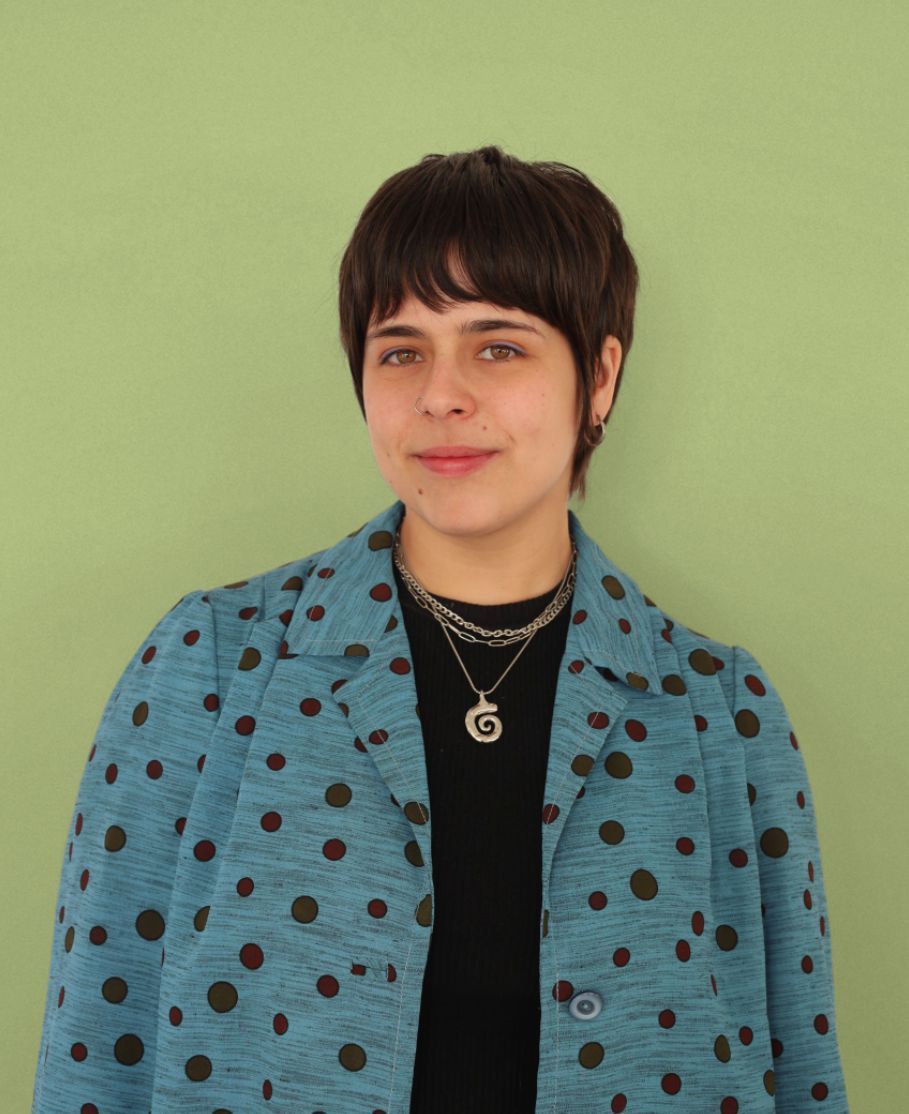
Sofía Cavaliere is an audiovisual and literary translator and transcreator, working from English into Latin American Spanish under her studio, Poetica Linguistic Solutions. She graduated from Universidad de Montevideo and is now pursuing a degree in linguistics. Her work is centered on entertainment and literary translation (subtitling for film festivals and streaming content, poetry, and prose) with additional experience in marketing transcreation and copy editing.


Sofía is also a poet and visual artist, and she brings that same creative sensibility to her translation work. She is part of Colectivo Sample, an editorial project dedicated to creating artist's books and promoting experimental art and literature.


We love to hear from our readers! If you wish to make a comment on this blog post, please use the comment box on the page below the post.

Categories

Archives

Select Month

The views and opinions expressed are those of the author and do not necessarily reflect the official position of NAJIT.

Recent Posts
By NAJIT Editor July 23, 2026
What happens when a professional interpreter steps under the chuppah? Athena Matilsky shares the joy, challenges, and unforgettable moments of interpreting a bilingual wedding.
By NAJIT Editor July 16, 2026
Learn how NAJIT and IKIGAI are creating reliable, multilingual Miranda warning translations to support law enforcement and protect LEP speakers’ rights.
By NAJIT Editor July 9, 2026
A personal reflection on AI, interpreting, and why the conversation should focus less on protecting professions and more on serving LEP individuals.
Show More