
On the Witness Stand: How the Federal Rules of Evidence can guide the interpreters’ performance
Direct Examination: Could you please tell us what driving instructions, if any, did you receive from the defendant here, Mr. Delfín?
Interpreter: Puede usted decirnos –
Opposing Counsel: Objection!
Judge: Sustained.
Direct Examination: I’ll rephrase, Your Honor.
Sir, when you were driving the truck with the 20 undocumented persons in the back, did you know where you were going to take them?
Interpreter: Señor, cuando usted iba conduciendo el camión con los 20 indocumentados atrás, ¿usted sabia a dónde los iba a llevar?
Witness: Bueno, a mí me habían dicho que los llevara hasta Houston y que de ahí alguien se los iba a llevar… no sé a dónde.
Interpreter: Well, I had been told –
Opposing Counsel: Objection, Your Honor, hearsay!
There was a question posed for the record that you did not get to interpret for the witness. There was something the witness said that did not get translated and is not on the record. It happens more often than we’d like to admit, and every time it does, we feel like we have failed the Limited English Proficient (LEP) witness. Well, that’s only because we know very little about the rules of evidence. There are 63 different rules in the Federal Rules of Evidence, and most states have adopted very similar rules. As interpreters, we don’t need to know all of them, but knowing at least what rules apply when we are interpreting testimony is going to make our job a little bit easier.
First, as a general rule, the LEP witnesses for whom we interpret are factual witnesses, which means they can testify only about things about which they have personal knowledge. The rules for expert witnesses are different, so let’s look at factual witnesses first.
The testimony offered must also be relevant to the elements of the offense or the issue being litigated. If an objection as to relevance is raised, either when the question is posed or the witness begins to answer, the interpreter needs to stop interpreting as soon as the objection is raised and wait for the judge’s ruling. If the objection is sustained, that’s the end of that: neither the question nor the answer, as the case may be, gets interpreted. The judge has ruled that the evidence is not relevant. Do not insist on finishing whatever portion of a question or answer remained unfinished.
There may be objections to testimony that could be relevant but the effect would be more prejudicial than probative. It is extremely important for jurors not to hear such evidence. Again, if there is an objection along those lines (most likely argued at sidebar) and the judge sustains it, neither question nor answer should be on the record. If there was something said in the foreign language that did not get interpreted, that’s how it must remain.
The objection that may be raised most often with factual witnesses is hearsay . That’s because lay people don’t normally think to narrate ONLY the things they have seen, heard, or otherwise perceived through their own senses. The moment a witness starts to narrate what someone else said, or what they themselves may have said outside of the courtroom, hearsay objections will start to fly. If we know how to recognize hearsay, we can strategize the consecutive rendition to minimize how much foreign language testimony is uttered but never interpreted. Here’s Rule 801(c):
(c) “Hearsay” means a statement that:
(1) the declarant does not make while testifying at the current trial or hearing; and
(2) a party offers in evidence to prove the truth of the matter asserted in the statement.
It is a pretty straightforward rule. So, if I hear a witness start to answer a question by saying, “ Fulano de tal me dijo… ” [“So-and-so told me…”], for example, I can immediately translate that portion of the testimony and let the attorneys decide whether or not they are going to raise a hearsay objection. If no objection is forthcoming, I will signal the witness to continue with the testimony. If one is raised, I signal the witness to stop answering.
Now, why would there not be an objection? Because the hearsay rule has at least 23 specific exceptions. If something is offered “not for the truth of the matter,” the hearsay rule may not apply, even if it sounds like hearsay. There are also specific circumstances, such as the admissibility of co-conspirator statements in criminal matters, or prior inconsistent statements made by the witness outside of the courtroom that may be used to impeach a witness and fall within the hearsay exceptions. Since we are not attorneys, we cannot know for sure when something that sounds like hearsay may, in fact, be admitted. This is a high skill in discourse analysis that interpreters would benefit from and would do well to develop because it could minimize witness responses that must not be interpreted under the rules of evidence.
There are also rules about leading questions, which are those questions phrased in such a way that they already suggest an answer, rather than being open questions. Under Rule 611(c), leading questions are not allowed during the direct examination of a witness, except in limited circumstances to help move the testimony along. However, they are allowed on cross-examination or when examining a hostile witness, an adverse party, or a witness identified with an adverse party. Once more, we can’t always anticipate when an objection may be raised or what the judge’s ruling will be, but if you know how to recognize a leading question, you can skip a beat before rendering it for the witness. This strategy will also avoid having foreign language testimony that never gets interpreted because an objection has been raised and sustained.
One final suggestion about expert witnesses. Rule 702 allows a witness who is qualified as an expert by knowledge, skill, experience, training, or education to give opinions when they testify on the basis of their scientific, technical, or other specialized knowledge. These witnesses are meant to assist the court and the triers of fact in understanding the evidence. The rule for expert witnesses was applicable to interpreters prior to 2011, when the Federal Rules of Evidence were amended. Nevertheless, it is the interpreter’s specialized knowledge of languages that allows the court and the triers of facts to understand evidence provided by LEP witnesses. To that extent, interpreters should pay special attention to their education, training, experience, professional credentials, professional affiliations, and all other qualifications that make someone an expert in any given field.
To summarize, questions and answers that do not get interpreted because an objection has been raised and sustained should never be interpreted. If you learn how to recognize certain questions or answers that are likely to raise objections, develop strategies to minimize having questions posed that the witness will never hear, or foreign language testimony that will never be interpreted for the record.
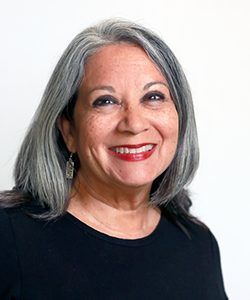
Janis Palma has been a federally certified English<>Spanish judiciary interpreter since 1981. Her experience includes conference work in the private sector and seminar interpreting for the U.S. State Department. She has been a consultant for various higher education institutions, professional associations, and government agencies on judiciary interpreting and translating issues. She worked as an independent contractor for over twenty years in federal, state, and immigration courts around the U.S. before taking a full-time job. Janis joined the U.S. District Courts in Puerto Rico as a staff interpreter in April 2002 and retired in 2017. She now lives in San Antonio, Texas, embracing the joys of being a grandmother. She also enjoys volunteering for her professional associations, has been on the SSTI and TAJIT Boards, and is currently the past Chair of the NAJIT Board of Directors. Contact: palmajanis88@gmail.com

We love to hear from our readers! If you wish to make a comment on this blog post, please use the comment box on the page below the post.
Categories
Select Category
Archives
Select Month
The views and opinions expressed are those of the author and do not necessarily reflect the official position of NAJIT.
Recent Posts