
Shredding Time!
I love birthdays, anniversaries, and—of course—new years, new decades, and new millennia. Each one gives me a chance to let go of whatever has been happening in my life that was just not going well at all and start again. It gives me a chance to let go of toxic people and relationships and start new ones. On a less cosmic level, it also gives me a chance to start getting rid of old papers and files I no longer need. My shredder is getting a full workout right now.
Going through old papers and files is cathartic. Getting rid of what is no longer useful is an outer physical effort that helps cleanse our inner spaces as well. Depending on what you find, it can also be an opportunity to brush up on things you may have forgotten, like when you find an old glossary you prepared for a trial on international money laundering.
Creating your own glossaries
I have a file cabinet drawer filled with hand-written glossaries in different folders that I should probably start to organize in one of those software programs designed to create glossaries. Of course, I can always resort to Excel, but maybe this is my year to try something new. As a baby-boomer, Computer Assisted Translation (CAT) tools are not my cup of tea. Learning to create glossaries using a software program specifically designed for that purpose is probably going to be both an intimidating and exhilarating experience. But that’s what this whole “get rid of the old and start something new” is about! Isn’t it?
My quest to shred old papers and rescue the ones I can convert into digital files began with a search for free software to create my own glossaries. The danger with these types of searches is that you can easily go down a rabbit hole of links that don’t take you where you want to go… or take you places you never knew existed and now are eager to explore. But we still need to separate the wheat from the chaff. Many international translation agencies and software vendors have all sorts of interesting articles about creating glossaries and managing terminology databases but, in the end, they are all trying to sell you something. I was not looking to spend money; I was looking for free software.
Do you want to create, store and retrieve your personal terminology data bank?
My rabbit hole incursion did yield some delicious fruit, like this wonderful essay by Dr. Ekaterini Nikolarea from the University of the Aegean on Creating a Bilingual Glossary for Translators. This paper “…is about what and how to search for, compile, build up, store and retrieve a personal bilingual Terminological Data Bank (TDB).” In the author’s own words, it was “written to cover a gap that everybody in Translation Studies refers to but nobody has written about: a methodology for a personal bilingual terminology compilation.” This is a great resource to have before embarking on the actual compilation of a glossary.
Then I found a great little resource on Bilingual Glossaries, Dictionaries, and Style Guides self-described as a page with “Governmentwide resources to make communicating government information to multilingual audiences easier and more consistent.” This page is an ongoing project created by “a group of federal, state and local government content managers, formerly known as the Federal Multilingual Websites Committee, who are working to expand and improve digital content in languages other than English.” This is not a web site that provides software to create your own glossary but once you open it, you’ll find a treasure trove of multilingual glossaries and dictionaries you’ll want to save for future reference. Click on the Multilingual Community of Practice link if you are particularly interested in the subject of Access for People with Limited English Proficiency.
There is quite a comprehensive list of terminology management programs listed in SourceForge , an “Open-Source software community resource “that you can join to share your own open-source project. Although open-sourced, the projects listed on this page look much more “hard core” than my current limited knowledge about software can grasp. For example, one of them, called Hypernomicon , is described as “a personal productivity/database application for researchers that combines structured note-taking, mind-mapping, management of files (e.g., PDFs) and folders, and reference management into an integrated environment that organizes all of the above into semantic networks or hierarchies in terms of debates, positions, arguments, labels, terminology/concepts, and user-defined keywords by means of database relations and automatically generated hyperlinks (hence ‘Hyper’ in the name).” But if you’re up to it, some look a lot more approachable, like OpenNetTerminologyManager , which “aims at developing a freely available concept-based terminology management system which is fully web based. Target audience: everybody who deals with translation and localisation.”
And, finally, a list of Free Online Terminology Tools that just blew my mind. Created by terminologist Maria Pia Montoro in 2013 and last updated in 2018, this is surely another resource you will want to save for future reference.
So, my paper shredding and all this metaphysical cleansing ritual is just getting started, but I am already feeling energized and eager to get going with new projects and new beginnings. How about you? Is there anything you have already started or want to begin this new year? Anything old you are shredding and getting rid of to make room for fresh and exciting things in your life?
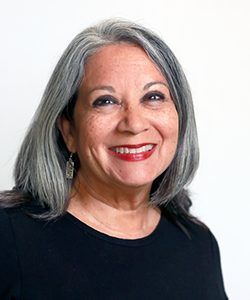
Janis Palma has been a federally certified English<>Spanish judiciary interpreter since 1981. Her experience includes conference work in the private sector and seminar interpreting for the U.S. State Department. She has been a consultant for various higher education institutions, professional associations, and government agencies on judiciary interpreting and translating issues. She worked as an independent contractor for over 20 years in federal, state and immigration courts around the U.S. before taking a full-time job. Janis joined the U.S. District Courts in Puerto Rico as a staff interpreter in April 2002 and retired in 2017. She now lives in San Antonio, Texas, embracing the joys of being a grandmother. She also enjoys volunteering for her professional associations, has been on the SSTI and TAJIT Boards, and is currently on the NAJIT Board of Directors. Contact: jpalma@najit.org
Read other posts by Janis Palma.
We love to hear from our readers! If you wish to make a comment on this blog post, please use the comment box on the page below the post.
Categories
Select Category
Archives
Select Month
The views and opinions expressed are those of the author and do not necessarily reflect the official position of NAJIT.
Recent Posts