
Who is the certification for? (Hint: It’s not who you think!)
By Janis Palma ©2017
Yes, it’s a feather in our caps! Getting that letter saying we passed, congratulations you are now a certified interpreter, is a great feeling of accomplishment. Having those letters after our names, FCCI, CCI, USCCI, or whatever they may be, suddenly can make us walk a little taller and prouder. But, hey, the truth is that certification as a judiciary interpreter, be it state or federal, is not at all about us.
Certification is about the needs of the court system and the people who get tangled up in that system. Of course, professions have a way of evolving and taking on a life of their own. Judiciary interpreters all over the U.S. have come to believe this whole credentialing machinery was somehow created for their benefit. It was not.
Court systems test interpreting candidates because they need those services and need them to fall within certain quality parameters that assure all stakeholders that the services being provided truly meet certain predefined objectives. Those objectives have to do with criminal defendants’ constitutional rights: effective assistance of counsel, being present and informed at all stages of proceedings against them, assisting in their own defense, being equally protected by the laws that protect every other person facing criminal charges in a court of law or what is also known as due process.
Court systems test interpreting candidates
because they need those services…
Certification as a judiciary interpreter is about the court being able to communicate with someone who does not speak English and would otherwise not be able to communicate with the court. It is not about how much money an interpreter gets paid, or what sort of accommodations that interpreter gets while working in a courtroom. These considerations, among others, are part of a professionalization process for what has become a “new class” of specialists within the legal system as a direct result of a government credentialing process.
[Certification] is not about how much money an
interpreter gets paid, or what sort of accommodations
that interpreter gets while working in a courtroom.
These considerations have to be earned on the basis of the interpreter’s performance once the credential is acquired. It is not automatic, and it is not “free”. Judiciary interpreters must set, follow, and urge all other members of the profession to abide by the ethical and professional standards that will command respect and proper remuneration.
Is a credential enough to accomplish this? What about education? What about an interpreter’s ability to demonstrate his or her command of the theoretical basis for the practical aspects of the profession? Can respect, proper working conditions and remuneration be achieved through labor-management type of negotiations? What is the unspoken message individual practitioners are sending to the rest of the legal community about our level of professionalism? What is the collective message?
Take a look around the country and answer these questions for yourself. I suggest we need to move beyond certification to raise our own performance and ethical standards. There is no entitlement attached to certification in and of itself. The entitlement comes from the effort we each put into being the best interpreter we can be every single day.
Certification as a judiciary interpreter is about the
court being able to communicate with someone who
does not speak English and would otherwise not be
able to communicate with the court.
Can you honestly say you are the best you can be right now? Or is there something more you could be doing to improve your skills, your knowledge base, and your overall performance as a professional judiciary interpreter? Is there something more you could be doing to help judiciary interpreting grow as a bona fide profession, beyond certification ?
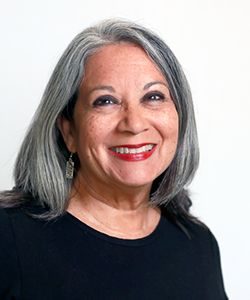
Janis Palma
has been a federally certified English<>Spanish judiciary interpreter since 1981. She worked as an independent contractor for over 20 years in different states. Her experience includes conference work in the private sector and seminar interpreting for the U.S. State Department. She joined the U.S. District Courts in Puerto Rico as a full-time staff interpreter in April 2002. She has been a consultant for various higher education institutions, professional associations, and government agencies on judiciary interpreting and translating issues. She is a past president of the National Association of Judiciary Interpreters and Translators.
Contact:
janis.palma@gmail.com

We love to hear from our readers! If you wish to make a comment on this blog post, please use the comment box on the page below the post.
Categories
Select Category
Archives
Select Month
The views and opinions expressed are those of the author and do not necessarily reflect the official position of NAJIT.
Recent Posts