
Contracts: Is it really a matter of trust?
Trust, the most important element
Let me start by thanking our colleagues who also took the time of their busy schedules to dig into their own experience to reply and help our colleague: Teresa Roman, Carlos Benemann, Andreea I. Boscor, Carlos Cerecedo, Myriam Sigler, Alfredo Babler, C. Carrera, Irene Radillo-Díaz, Rober Silva. The main issue regarding contracts is that they must be based on trust: each party has to trust the other to fulfill their part of the agreement. And Alfred Babler put it succinctly: “ [I]t is always better to develop a relationship of trust with the people you do business with rather than to force them into [a] specific performance.” Our colleague had three basic questions, let’s see how they were addressed.
What should I be looking for in a contract?
Teresa suggested getting some education on the nuances of contract language by going through the exercise of translating a contract: “ You will see where there may be ambiguity, things that are unfair will jump at you, things you had not thought of will amaze you, etc. ” C. Carrera adds her two cents: “I decline provisions [in which, when] our work is considered substandard […] it’s only the other party who determines that and we are not given notice and an opportunity to be heard.”
The client usually tells you (the Vendor) what they expect from you, how they are going to pay you and where disputes will be resolved (including which set of laws they will use). But you can talk with them about these details and reject the whole contract or just parts of it. There is a tool called “severability clause” that renders a contract like a puzzle: you can pick which parts you want to play with from the original set and adjust those you don’t like. The thing is, you should not sign a contract you don’t fully agree with or can’t stand. That is where having a list of your terms and conditions may be enough to guide you in the negotiations.
What should I demand in a contract?
Teresa said, “My contract for depositions, for example, clearly states I expect to receive a check in advance, or on the date, before the deposition begins. For translations, I want clients to sign my contract before I translate one word. If it’s a company, I want them to sign theirs and send it to me before I translate one word. Good luck in the field!!!” My own response to this question was a bit cryptic : “ Respect: my service has a price; my time has a price. When dealing with direct clients, I request either full payment or 25% [of the full fee] at the acceptance of my terms.”
Should I have my own contract?
From Teresa: “ Yes, you should. I recommend translating the longest contract you have ever signed, as a case study for yourself. You will read the language in a totally different way.” And C Carrera suggested going a bit further, “ I recommend that Interpreters take a class on contract law for laypeople. ” Andreea I. Boscor agreed.
Not everyone works with standard contracts. Carlos Benemann shared his secret sauce with us:
“MY REQUIRED STEPS FROM YOU [The Client] ARE SIMPLE:
1.
Tell me what it is, where it is and when it is.
2.
Agree to my flat fee compensation (Done) and cancellation policy.
3.
Pay me within the agreed period of time.
MY STEPS ARE:
1.
I offer decades of experience, punctuality, and professionalism as a Certified Interpreter.
2.
I will confirm the assignment once I receive it in writing.
3.
I will bill in writing once it has been completed. SIMPLE.”
Carlos Cerecedo and Myriam Sigler wholeheartedly agree with Carlos, and Irene Radillo-Díaz adds, “I agree with Carlos Benemann that in essence, you are the one who can determine what conditions you are comfortable with and what your requirements are [.]”
Basically, you have to trust the client will pay you and the client has to trust that you will deliver your end of the bargain. As I stated in the comments, “ Contracts, between honorable people, is a good tool for when ‘memories lapse’.”
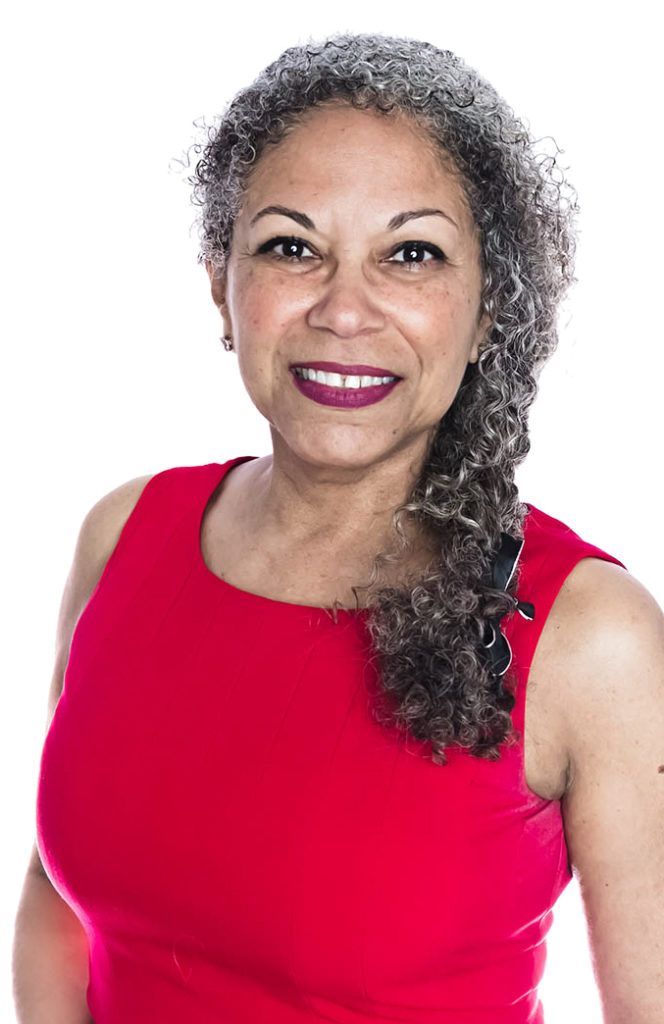
Brazilian-born Giovanna “Gio” Lester, Co-Chair of NAJIT’s PR Committee, started her career in translation and interpreting in 1980. Gio is very active in her profession and in the associations she is affiliated with. In 2009, she co-founded the Florida ATA Chapter (ATIF), served as its first elected president (2011-2012), and later as president of its interim board. As an international conference interpreter, Gio has been the voice of government heads and officials, scientists, researchers, doctors, hairdressers, teachers, engineers, investors and more. Gio has been a contributor to The NAJIT Observer since its inception in 2011, and its Editor since 2016. In 2017 she was appointed Chair of the Miami Dade College Translation and Interpretation Advisory Committee, which she had been a member of since 2014. In 2018, Gio was elected to the Executive Committee of the Brazilian Association of Translators and Interpreters, Abrates, as its General Secretary. You can follow her on Twitter (@cariobana), learn more about Gio on her website , and she can also be reached at gio@giolester.com. Click here to read other posts by Gio.

We love to hear from our readers! If you wish to make a comment on this blog post, please use the comment box on the page below the post.
Categories
Select Category
Archives
Select Month
The views and opinions expressed are those of the author and do not necessarily reflect the official position of NAJIT.
Recent Posts