
One profession, one name
Can we please standardize the name we use to refer to our profession and those who practice it? There are so many variations on a theme: legal interpreting, community interpreting, court interpreting, public-service interpreting, judicial interpreting, and of course, the one name adopted by our national association: judiciary interpreting . The thing to keep in mind is that interpreters who work in legal settings do not always work in courthouses or courtrooms. Sometimes the work takes place in small jailhouse rooms where attorneys get to meet with their clients. Sometimes it happens in elegant high-rise offices with a stunning view of the ocean. Legal settings can range from conference rooms to living rooms, with all sorts of courtrooms in between: municipal, federal, small claims, family, drug courts, juvenile.
Interpreters who are qualified to work in legal matters can be called upon for polygraph exams, medical exams, psychological evaluations, post-arrest bookings, pretrial services interviews, none of which happen inside a courtroom necessarily. Calling us “court interpreters” or what we do “court interpreting” is not just limiting but is also misleading. Interpreters who work in legal settings perform under wildly unrelated sets of circumstances – even depositions in the middle of an oil field or on a dairy farm, on board a shrimp boat or a luxury cruise liner.
Furthermore, our work is not limited to legal terminology, as the designation “legal interpreter” or the label “legal interpreting” might suggest. Criminal matters, for example, can involve forensic sciences like fingerprint analysis, DNA testing, ballistics, and things as dissimilar as the parts of an automobile or the parts of a body. State and federal laws can include the protection of marine biology or prosecuting wildlife smugglers. Civil matters, on the other hand, can involve insurance claims arising from natural disasters or medical malpractice; they can come about from a hydraulic-engineering failure that caused a bridge to collapse or from the damages to a family resulting from a defective product. The level of language proficiency and subject-matter expertise required in this professional specialty goes far beyond the realm of what the term “legal” by itself could encompass.
What we do is a necessary public service, but we are more than public servants. Our work benefits different linguistic communities, but we are not interpreters for a specific community. Nor are we “judicial interpreters,” as some have also termed our profession, because judicial refers to the function of judging or the administration of justice, which is not what we do. Our function is not judicial. Neither are we “linguists.” We are interpreters . Yes, we need a good foundational knowledge about linguistics, but our role is far more complex. We are not just “one who speaks several languages” or “a person who specializes in linguistics.”
The work we do can best be described as “judiciary interpreting” because the term judiciary encompasses everything that happens within “a system of courts of law.” That is the overarching context in which we perform our work. Decades ago, the NAJIT membership pondered this question and decided to adopt a name that truly described the nature of our work, a name that is neither limiting nor misleading. Now, if we were able to find consensus to call our professional organization the National Association of Judiciary Interpreters and Translators , can we not find a way to standardize the names of all those educational programs around the country, all the academic research papers and all the references to our profession in every government agency? Can we please call interpreters in legal settings judiciary interpreters ? It would be one step, maybe small but also significant, towards getting practitioners and stakeholders on the same page, sharing an understanding of what this critically important function for our country’s system of justice is all about: judiciary interpreting.
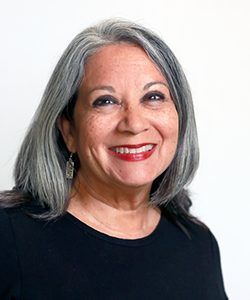
Janis Palma has been a federally certified English<>Spanish judiciary interpreter since 1981. Her experience includes conference work in the private sector and seminar interpreting for the U.S. State Department. She has been a consultant for various higher education institutions, professional associations, and government agencies on judiciary interpreting and translating issues. She worked as an independent contractor for over twenty years in federal, state, and immigration courts around the U.S. before taking a full-time job. Janis joined the U.S. District Courts in Puerto Rico as a staff interpreter in April 2002 and retired in 2017. She now lives in San Antonio, Texas, embracing the joys of being a grandmother. She also enjoys volunteering for her professional associations, has been on the SSTI and TAJIT Boards, and is currently on the NAJIT Board of Directors. Contact: jpalma@najit.org

We love to hear from our readers! If you wish to make a comment on this blog post, please use the comment box on the page below the post.
Categories
Select Category
Archives
Select Month
The views and opinions expressed are those of the author and do not necessarily reflect the official position of NAJIT.
Recent Posts