
The Year of the Tiger: Empowering Judiciary Interpreters
There are many ways to start off the New Year: resolutions to take that yoga class you’ve been meaning to take, or that creative writing course, or maybe getting a whole new advanced degree in something exciting, like archeology! Could this be the year you get to travel somewhere where you can polish that second or third language, or perhaps overcome your nervousness and finally submit a proposal to present at a conference before your peers? New Years always seem to open the doors to opportunities we have been leaving by the wayside, things we have postponed while waiting for a better moment, or a better something we can’t quite define.
Well, how about making this the year we truly empower judiciary interpreters? Sure, we can do all those other things, but I’m talking about taking a leap into our future that we should have taken long ago. When was the last time you felt our profession moved forward? Made some real, tangible progress? Lately, it has felt more like the profession as a whole is slippin’ and slidin’ backwards. Courts thinking remote work is “easier” somehow than in-person work; administrators and judges refusing to pay for the time an interpreter spends waiting for an assignment; non-credentialed persons being sent to work in different venues instead of interpreters who have been tested and certified. All this is symptomatic of a profession that is not truly empowered to take charge of its own destiny, growth, and development. These are the signs of a profession that is not defining its own “rules of engagement” and is quickly falling prey to those who sense the weaknesses and pounce on them, simply because they can.
As we step into this New Year, we should all take a moment—or two, or three—to think about what each of us can do to be fully empowered as individual practitioners, but also as members of a profession, a collective that can be only as effective and as powerful as each of us make it, together.
It is high time we think carefully about who is in charge of our profession, who defines our performance parameters, and who sets the rules that judiciary interpreters follow. So far, many of the things we take at face value have been imposed by people outside our profession. Do hospital administrators tell doctors how to operate on a patient? Do clients tell architects how to draw the plans for a building?
We need to be the experts in everything that involves transferring messages and meaning between languages and cultures—both social and legal cultures. That means educating ourselves. It means taking the time and interest to learn more than the contents of dictionaries or the techniques that get included in our certification tests. We then need to take the next step, which is to bring that expertise to the table and have the other experts working with us—legal professionals, court administrators, law-enforcement officers—regard us as their equals and listen to what we need so that we can do our job effectively and efficiently. If we empower ourselves, there is no need to raise our voices, no need to engage in “battles”; we will act and speak from a position of power, establishing channels of communication that lead to mutual understandings based on mutual respect.
This is the year of the tiger, a symbol of strength, vitality, and growth. “Tigers are independent, fearless, loyal and have high-self esteem. Tigers are strong in the face of adversity and never back down from a challenge, they’re persistent and determined.” [1] This should be the year when we, as a profession and as individual practitioners, become fearless, persistent, and determined to set our own terms for who we are, what we do, and how and why we do it. We are not “machines” processing the discourse of others as if we had no brains of our own, no capacity to make intelligent decisions about the role we play in LEP litigants’ and defendants’ true access to justice. This is “a view that reveals lack of awareness of the intricacies of discourse practices and sense-making processes, the influence of contextual factors upon human interaction, and misunderstanding the process of interpreting between languages.” [2] We certainly do not need to be lower on the totem pole than the rest of the court personnel.
This should be the year that we grow, taking ownership of the multiple and complex cognitive tasks we perform, the “fluid intelligence” [3] that allows us to transport messages and meaning from one human language to another, embedded in dissimilar legal systems and cultures, while we are constantly striving to excel. Up until now, we have allowed others to make decisions for us, to occupy the field for us. This year, let’s take it all back. Let’s build up our expertise, those essential “automatic cognitive functions, such as working memory, [and] attentional resources” [4] that send a clear signal to everyone around us: we are the interpreting experts, we are in charge.
We can sit back and wait for someone else to do all the work that will stop the backsliding we have witnessed for the last two years. Some can continue to “fight” on those separate fronts that solve temporary problems. Or we can all finally decide to work together to change things, to take back the profession that belongs to each one of us and to all of us. We can decide, collectively, to make this our Year of the Tiger, the year we all truly empower our profession.
[1] https://www.elle.com.au/culture/year-of-the-tiger-chinese-new-year-2022-26352
[2] Monteoliva-Garcia, E. “The last ten years of legal interpreting research.” Language and Law / Linguagem e Direito , Vol. 5(1), 2018, p. 38-61.
[3] Preece, D. (2012). The Effect of Working Memory (n-back) Training on Fluid Intelligence. https://ro.ecu.edu.au/theses_hons/54
[4] Wszalek, Joseph. “Ethical and Legal Concerns Associated With the Comprehension of Legal Language and Concepts.” AJOB Neurosci ence. 2017; 8(1): 26–36.
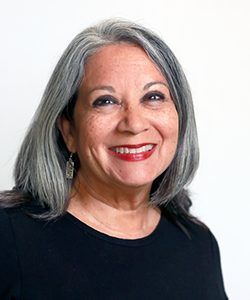
Janis Palma has been a federally certified English<>Spanish judiciary interpreter since 1981. Her experience includes conference work in the private sector and seminar interpreting for the U.S. State Department. She has been a consultant for various higher education institutions, professional associations, and government agencies on judiciary interpreting and translating issues. She worked as an independent contractor for over twenty years in federal, state, and immigration courts around the U.S. before taking a full-time job. Janis joined the U.S. District Courts in Puerto Rico as a staff interpreter in April 2002 and retired in 2017. She now lives in San Antonio, Texas, embracing the joys of being a grandmother. She also enjoys volunteering for her professional associations, has been on the SSTI and TAJIT Boards, and is currently on the NAJIT Board of Directors. Contact: jpalma@najit.org

We love to hear from our readers! If you wish to make a comment on this blog post, please use the comment box on the page below the post.
Categories
Select Category
Archives
Select Month
The views and opinions expressed are those of the author and do not necessarily reflect the official position of NAJIT.
Recent Posts