
What We Call Ourselves Matters
Every profession has certain requirements that allow a person to enjoy the benefits and respect of their respective titles. I have been wondering lately about all the people who call themselves “interpreters” and whether they all deserve to attribute that title to themselves.
I know we are still too far from a uniform credential in our profession, particularly in the judiciary field. That means we are also far from being able to protect who can and cannot call themselves an interpreter. Notwithstanding what may happen in the near or distant future, I want to share these thoughts and maybe get others to think about it for a bit.
“Where” does not matter
I believe we all agree there are certain guiding principles that apply across the board to everyone providing language services in a legal setting. Whether state or federal, in court or out of court, interpreters in legal settings have the exact same ethical duties to be accurate and impartial. The responsibility of conveying fully what a speaker has said in one language into another language, retaining the same meaning and discursive register, does not change because the interpreter’s physical environment has changed.
The idea that some judiciary interpreters don’t need the same set of skills as others, that it’s okay for some judiciary interpreters to perform at a lower level of competency than others, is simply ridiculous. A criminal defendant in a state court has the same constitutional rights as a criminal defendant in federal court. It has been established for more than four decades by now that the reason for non-English speakers to be provided with an interpreter is that to do otherwise would be a gross miscarriage of justice.
We make the voiceless heard
We exist because otherwise those non-English speaking criminal defendants would be unable to assist in their own defense or confront the evidence against them. Also, witnesses who do not speak or understand English would be unable to provide testimonial evidence without us. The rigorous demands of our profession are no less stringent because someone needs assistance to communicate and understand what is happening in an administrative hearing versus a criminal trial, or a police interrogation versus a deposition under oath.
Yes, there are still those who think “anyone can do this” and that we are “grossly overpaid”. That’s what happens when anyone can walk into a courtroom and call themselves an “interpreter”. It is up to us, however, to uphold the highest standards for ourselves and demand the same standards of those who claim to be members of our profession within the legal arena. It is up to each one of us to educate ourselves, so we are better and better every time we walk into an interpreting assignment. We each represent our profession and we are each an ambassador for what we want our profession to be. No one else can do this for us.
The minimum is not enough
We cannot tolerate mediocrity in ourselves or others. While it may be easy to delude ourselves thinking we have “made it” once we obtain a credential, and to become complacent, the truth is that a credential—be it state or federal certification—is not the end game. A credential identifies those who have met the minimum skills required to provide language services in a system of justice that intends to protect the Constitutional rights of those who do not speak or understand the language of the court.
Why should those minimum skills be any different in one system of justice from the other? Why have we accepted the fallacy of a “more competent” or “less competent” interpreter depending on which judicial or quasi-judicial setting requires their services?
Where should have no bearing on quality
Are attorneys expected to be “less competent” if they practice in state court whereas those who practice in federal court are expected to be “more competent” because they passed the federal bar exam? No. What is expected of them is to be familiar with the rules and processes that apply in one venue versus the other. In our case, we should be expected to be familiar with the terminology inherent to either state or federal proceedings, and perhaps the protocols to be followed in each. The same principle applies if we are engaged in administrative or quasi-judicial proceedings. But the idea that lesser accuracy can be tolerated in an “interpreter” who is engaged in quasi-judicial, out-of-court, or smaller local courts’ proceedings, undermines all our efforts to be recognized as a bona fide profession within the judiciary.
In the United States, someone who finishes law school but does not pass the bar cannot be called an attorney. They can be law clerks or legal assistants, but they cannot stand in court and represent themselves to be attorneys-at-law.
Titles matter
So, here’s some food for thought: how about calling someone who has yet to obtain a criterion-referenced credential a language assistant , or an interpreter’s assistant ? Of course, there are language combinations for which no criterion-referenced examination exists, but we can deal with those exceptions. The interpreters in the Southern District of New York, under Nancy Festinger’s leadership, developed many instruments to measure an interpreter’s competence in those language combinations for which there were no other tests. There is no reason why we cannot fill in these voids ourselves. As a matter of fact, there is no reason why we cannot be in charge of our own credentialing process.
We certainly cannot continue for much longer having it both ways. Either we are all professionals and hold the title of interpreter because we have earned it through training, experience and credentialing, or we are not. Either it’s easy to join our ranks and therefore anyone can do this, with the consequential low pay and lack of respect, or it is difficult and demanding, so those who get to call themselves interpreters enjoy an appropriate prestige and remuneration.
Who’s an interpreter?
This may not be the right moment to be taking up the nomenclature cause, but I do believe that with so many people who still don’t know the difference between a court reporter and a court interpreter, or an interpreter and a translator, what we call ourselves matters. Who we allow to use the title of “interpreter” matters.
I do look forward to that day when we all take such pride in our profession that there will be no stratification of skills among those holding a professional credential. There will be no pay discrimination because of those differences. I look forward to the day when our status as language experts will be immediately recognized when we say: I am a judiciary interpreter.
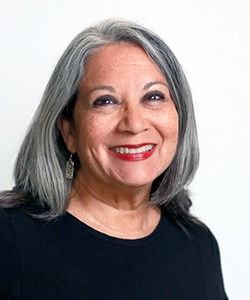
Janis Palma has been a federally certified English<>Spanish judiciary interpreter since 1981. She worked as an independent contractor for over 20 years in different states. Her experience includes conference work in the private sector and seminar interpreting for the U.S. State Department. She joined the U.S. District Courts in Puerto Rico as a full-time staff interpreter in April 2002. She has been a consultant for various higher education institutions, professional associations, and government agencies on judiciary interpreting and translating issues. She is a past president of the National Association of Judiciary Interpreters and Translators. Contact: janis.palma@gmail.com

We love to hear from our readers! If you wish to make a comment on this blog post, please use the comment box on the page below the post.
Categories
Select Category
Archives
Select Month
The views and opinions expressed are those of the author and do not necessarily reflect the official position of NAJIT.
Recent Posts